
The Port Corpus Christi Center for Wildlife Rescue (WRC) is the nation’s leading coastal wildlife rescue and rehabilitation program, returning more than 5,200 animals to the wild since 2005. The WRC provides standing operational capacity to support large-scale wildlife emergencies, environmental disasters, and species protection efforts in coordination with state and federal partners. It functions as critical wildlife response infrastructure, supporting preparedness, emergency response, and recovery efforts while strengthening interagency coordination during environmental and wildlife emergencies.
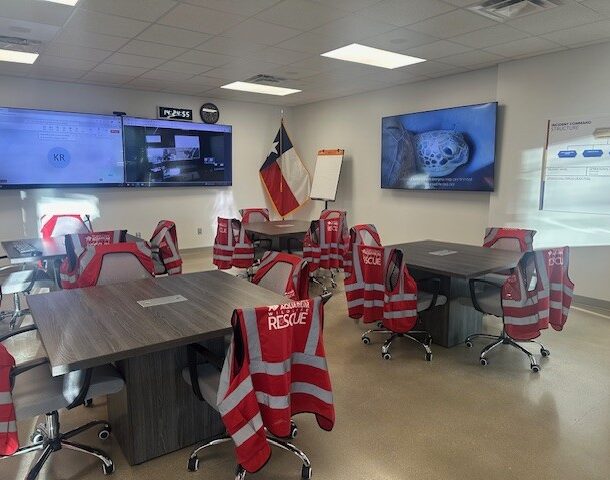
The Wildlife Response Operations Center
The Wildlife Response Operations Center (WROC) coordinates emergency wildlife response across Texas and the Gulf Coast. As a cooperative initiative, the WROC engages partners including the Texas Parks and Wildlife Department, Texas General Land Office, Texas Commission on Environmental Quality, Texas A&M University–Corpus Christi, Port Corpus Christi, the U.S. Coast Guard, and the National Park Service. It leads disaster planning, training, and response operations.
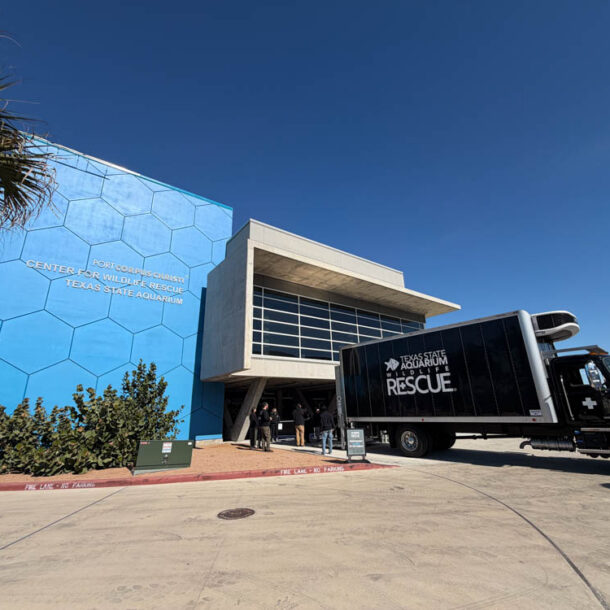
The Port Corpus Christi Wildlife Rescue Center
The Port Corpus Christi Wildlife Rescue Center (WRC) is the nation’s leading coastal wildlife rescue facility. Since 2005, the WRC has returned over 5,200 animals to the wild. Facilities include intensive care and holding areas for dolphins, manatees, American black bears, mountain lions, sea turtles, American ocelots, North American river otters and an outdoor flight therapy facility for birds acclimating to South Texas weather before release. The WRC can house over 3,000 aquatic animals simultaneously during a wildlife disaster and is equipped with cutting-edge rehabilitation technologies.
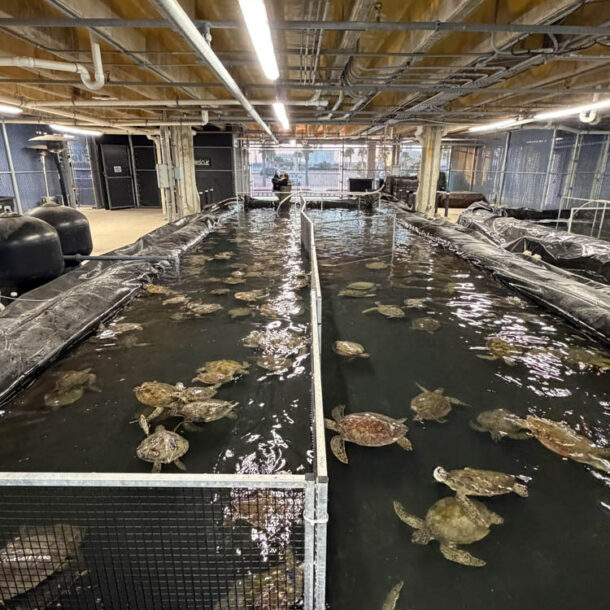
Aquatic Field Stabilization System
To support field operations, the WRC maintains a deployable Aquatic Field Stabilization System (AFSS), including a mobile stabilization pool, weather protection, emergency power, water pumps and filters, and heating for cold-weather use. This patented system can be transported and operated anywhere in Texas and is being tested for various wildlife rescue scenarios.
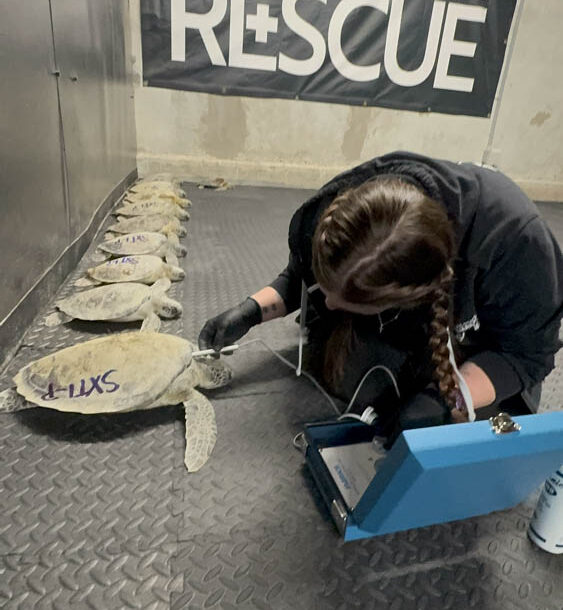
State-of-the-Art Aid
During a wildlife response, the WRC has veterinary staff on-hand to assess each patient at intake and provide all aid needed for each individual. Should a patient require long-term care, the WRC has hospital facilities with diagnostic equipment, including a CT scanner, to monitor progress for eventual release.
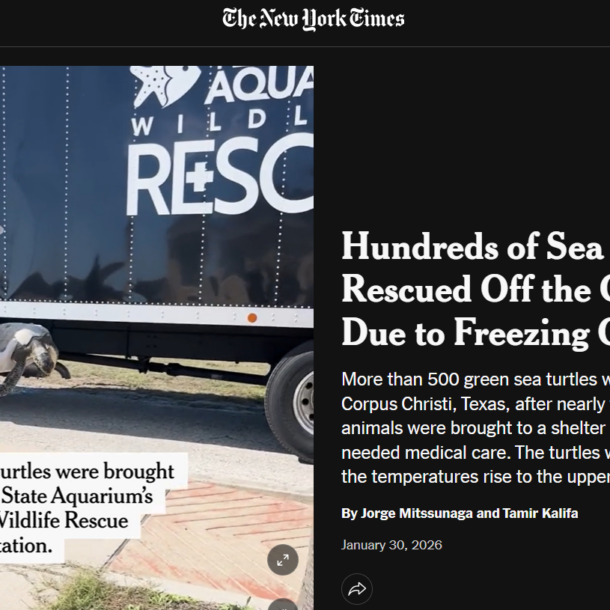
In the News
Real Stories. Real Impact.
From emergency rescues to long-term recovery, our work is making headlines across Texas and beyond. These stories showcase the power of collaboration, and swift action—bringing attention to the animals we serve and the resiliency we strive to build every day.